
White Paper: Rubber Injection Molding
Click image to download white paper
Rubber Injection Molding: Which Process Is Right for Your Application?
When manufacturing precision rubber seals, gaskets, and grommets, the molding process can have a major impact on part quality, consistency, production speed, material waste, and cost.
Compression, transfer, and injection molding each offer distinct advantages—but choosing the right process isn’t always straightforward. Factors such as part geometry, elastomer selection, production volume, tooling investment, and tolerance requirements all play a role.
For high-volume, complex components, rubber injection molding can offer significant advantages, including tighter process control, greater repeatability, shorter cycle times, and the ability to produce more complex geometries. Advanced technologies such as cold runner and valve-gated systems can also dramatically reduce material waste.
But when does injection molding make sense—and when might compression or transfer molding be the better approach?
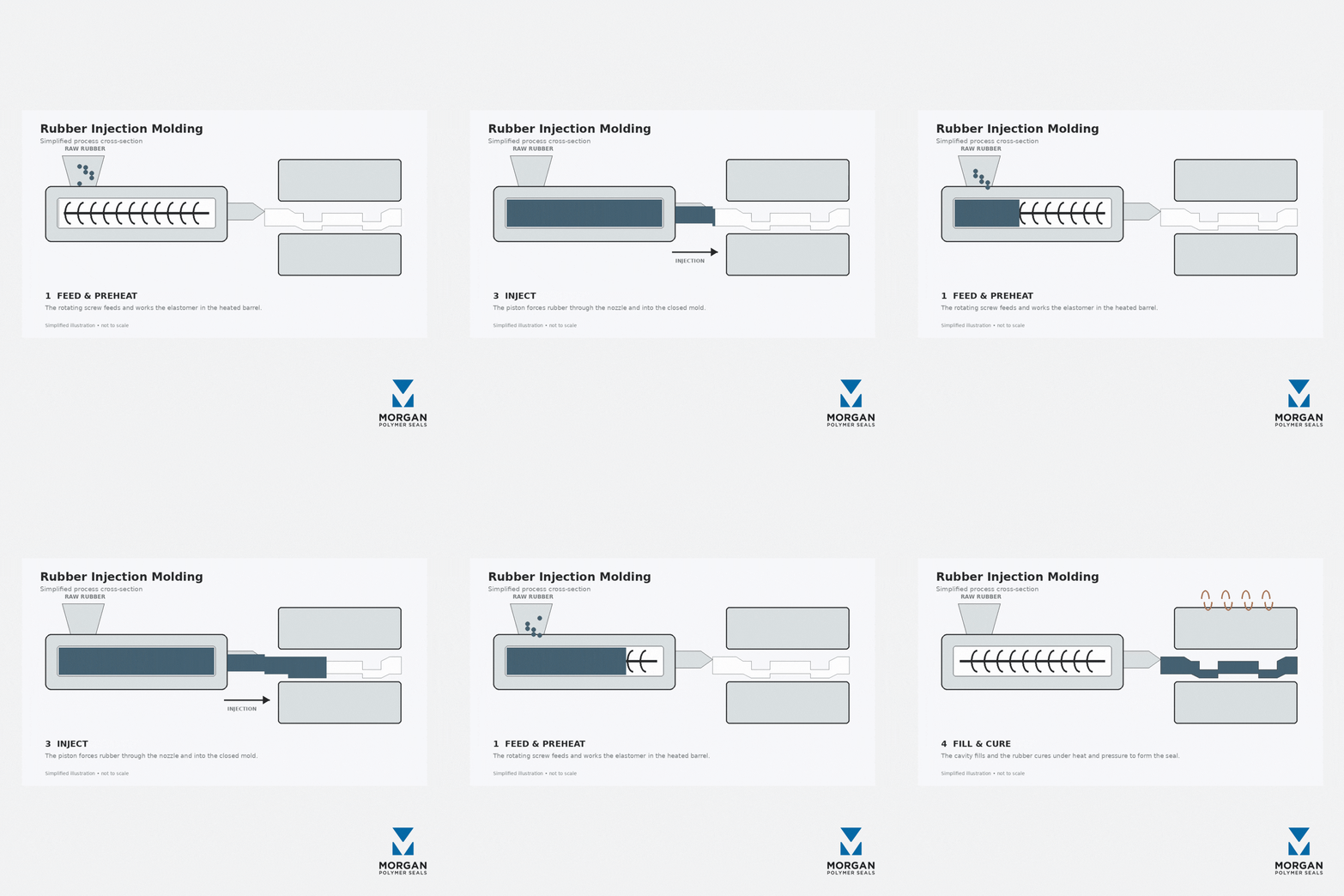
Animation: demonstrates injection process
Our Rubber Injection Molding White Paper breaks down the three primary molding processes, explains the advantages and limitations of each, and takes a closer look at the equipment and technologies behind high-precision rubber injection molding.
Download the white paper to learn how the right molding process can improve quality, efficiency, and consistency in your next rubber component program.